Toxicology
Confirmation testing that tells a prescriber what a patient has actually taken, not what a screen guessed at. Used to verify medication compliance, identify drug interactions, detect diversion, and confirm a therapeutic response.
Specimen types
- Urine Drug Testing UDT
- Oral Fluid Drug Testing OFDT
Method
Liquid chromatography with tandem mass spectrometry (LC-MS/MS)
Analyte classes
Panels are built to the clinical question. Ask us to combine or narrow these for a particular patient population.
- Alcohol Metabolites
- Amphetamines
- Anticonvulsants
- Antitussives
- Barbiturates
- Benzodiazepines
- Cannabinoids
- Illicit Drugs
- Muscle Relaxants
- Opiates
- Opioids
- Psychoactive Drugs
- Sleep Aids
- Selective Serotonin Reuptake Inhibitors
- Synthetic Cannabinoids
- Tricyclic Antidepressants
What confirmation testing changes.
- Verify medication compliance against what was prescribed.
- Identify drug interactions before they cause harm.
- Detect a therapeutic response, or the absence of one.
- Minimize adverse events through definitive identification.
How results are reported.
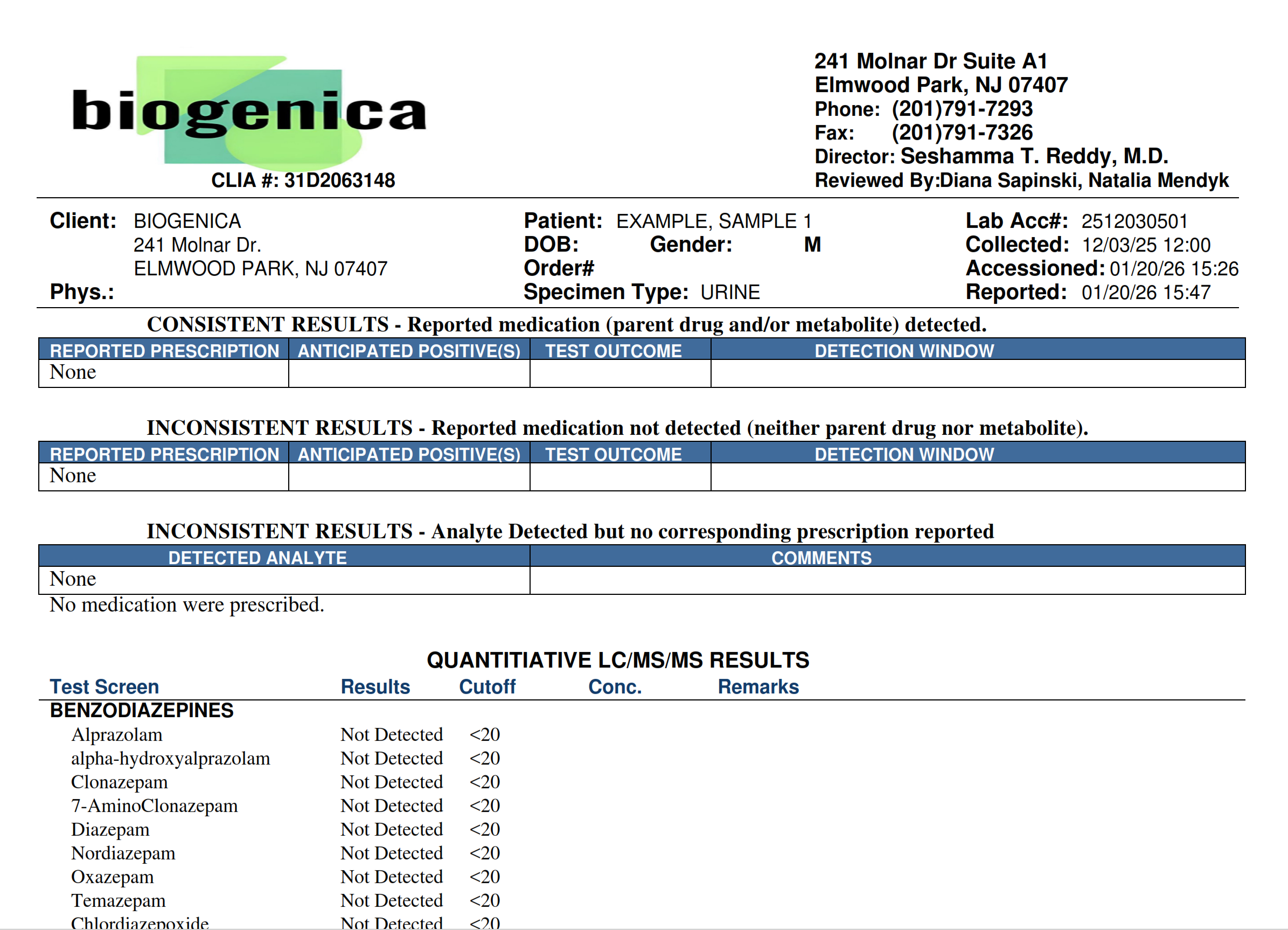
Consistent and inconsistent findings are separated at the top, so whether the result matches what was prescribed is answered before any numbers are read. Quantitative LC-MS/MS results follow, each against its cutoff.
Your ordering and results have not moved.
Requisitions, supply requests and patient results continue through the same system your practice already uses. This site is informational.